
Solving the Real Problem
Project Summary
During a high-visibility project, I quickly recognized that we were missing critical business input. By identifying the right roles to engage and knowing what questions to ask, I was able to guide the team toward a more relevant and efficient solution—one that better aligned with actual user needs. This pivot happened before development began, saving time and ensuring we built the right thing from the start.
Problem
Context
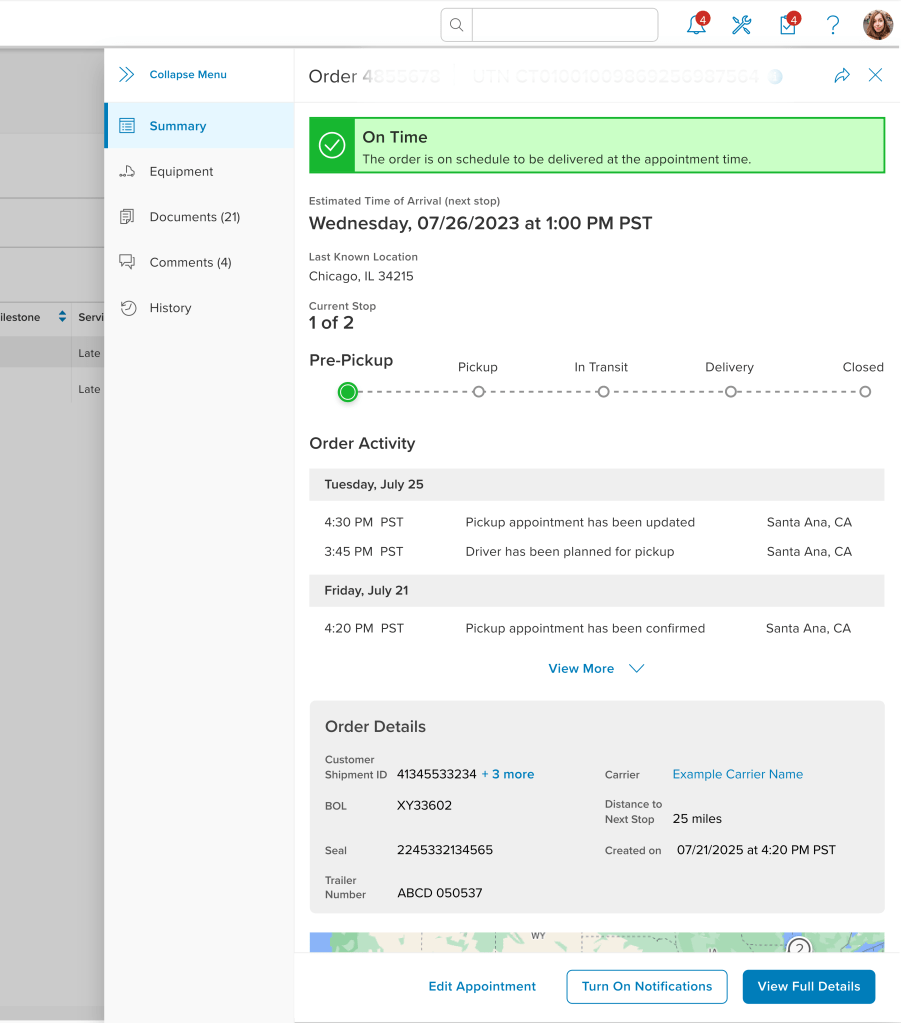
As the company prepared to sunset a legacy application, we needed to recreate key functionality that allowed users to quickly access freight information anywhere within the platform.
Research Methods
I directed a UX researcher to conduct industry research and identify common use cases and essential data points. In parallel, I facilitated quick working sessions with internal teams to align on business goals and uncover the right stakeholders.
Research Findings
Through our discovery work, we learned that users were struggling with the filtering system and information hierarchy on the current details page. We also uncovered that users were bouncing between multiple systems to gather tracking data for customer status reports—an inefficient and frustrating experience.
Solution
My Approach
We identified the shared data points across transit modes to create a consistent experience that could be easily accessed by all users from the Platform header.
Collaboration
Using an API-led approach allowed us to conduct both design and development simultaneously enhancing our efficiency and shortening the project timeline.
Process
Leveraged wireframes to capture early concepts and stakeholder vision.
Provided interactive mockups to demo with leadership and give guidance to dev team.
Quick View Panel
 Kris King