Standardizing the UX Process
Project Summary
To streamline communication, support onboarding, and create alignment across the cross-functional team, I designed a yearly UX kickoff program. This initiative sets the foundation for how we work together throughout the year, ensuring new team members are set up for success and that everyone is aligned on a shared, scalable UX process. It’s a key part of how I help ensure our collective output meets the highest standards.
Problem
Context
I recognized a broader need to standardize the UX process across product teams. My goal was to increase the quality of UX output, strengthen cross-functional relationships, and ensure squads had a consistent and reliable experience when partnering with the UX organization.
Research Methods
To guide the development of a scalable process, I conducted both external and internal research:
- Industry Research: I referenced thought leadership and best practices from sources like Nielsen Norman Group (NNG) to ensure our approach aligned with proven industry standards.
- Internal Research: I collaborated closely with UX Designers, UX Researchers, Developers, Development Managers, and Product Owners to understand what each role needed from the UX process and where pain points existed
Research Findings
- Industry leaders consistently used clear phases in the design process to streamline communication with cross-functional partners.
- Internally, UX was often perceived as a “black box” — requirements would go in, and designs would come out, with little visibility into what happened in between.
- Product teams expressed frustration around undefined timelines and shifting requirements, often feeling that UX was a bottleneck in the process.
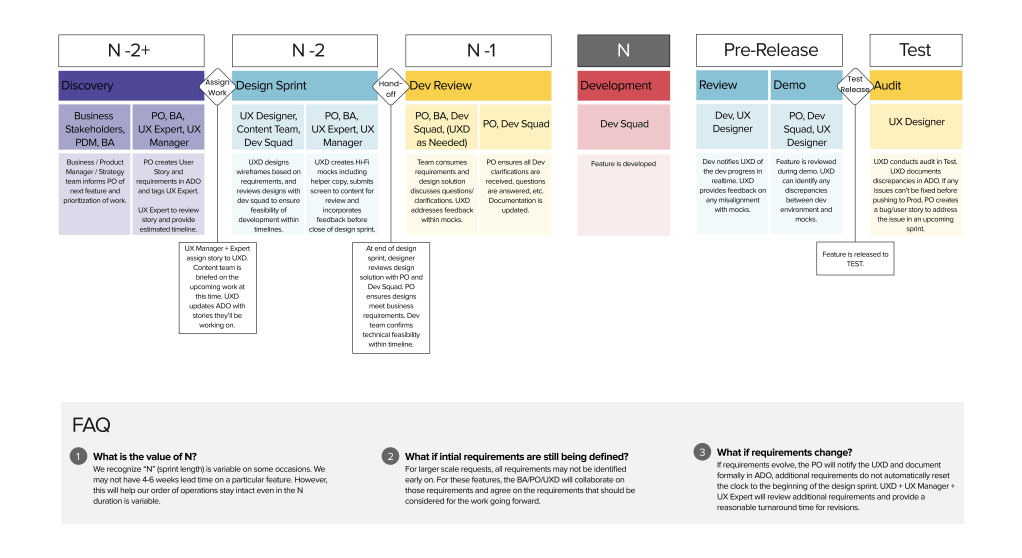
- It became clear that a simple, visual process map—emphasizing collaboration and transparency—could go a long way in improving alignment, trust, and efficiency across the product development lifecycle.
Solution
My Approach
To ensure the process fit product team needs and was flexible enough to account for exceptions like last minute C-suite projects we piloted and iterated before pushing it out as the enterprise standard .
Implementing this process impacted several key areas:
- Higher quality UX output
- Stronger cross-functional collaboration
- Reduced bottlenecks and increased efficiency
- Improved team morale and onboarding
- Greater visibility into UX work
- Better alignment with Business goals
Collaboration
I collaborated with each role in the product team to gather input and ensure their concerns were being addressed.
Process
- High Level Phases: Began by implementing high level process stages.
- Pilot Process: Piloted the working process with a product team to pressure test it in a the real world.
- Iterations: Improved the process based on product team feedback to increase content clarity and account for exception scenarios.
 Kris King